
Phytomyza anemones Hering, 1925
On Anemone
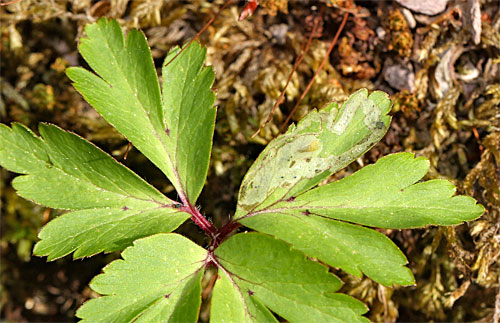
Anemone nemorosa. Belgium, Viroinval, Le Mesnil, 9.v.2026 © Stéphane Claerebout
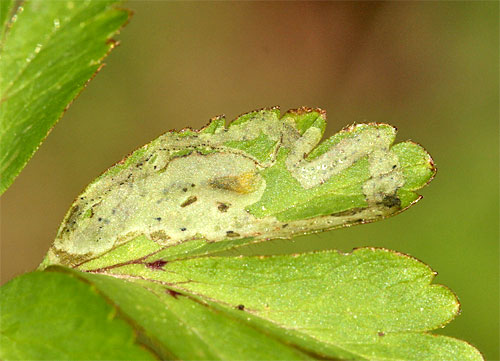
detail
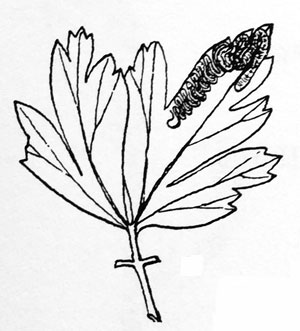
from Hering (1957a)

Anemone nemorosa, eastern Denmark © Simon Haarder
mine
fairly transparent, upper-surface, gradually widening gallery, forming a secondary blotch near the end. Primary and secondary feeding lines present in fresh mines. Frass in isolated grains of increasing size. Pupation now inside, then outside the mine (Hering, 1957a); however, according to Pakalniškis (2004a) pupation invariably is internal, below the upper epidermis. According to Griffiths (1956a) several larvae in a leaf.
hostplants
Ranunculaceae, oligophagous
Anemone coronaria, hortensis, nemorosa; Clematis flammula.
phenology
Larvae in May (Hering, 1957a).
BENELUX
Not known from the Benelux countries (Fauna Europaea, 2008).
distribution within Europe
From Sweden and Finland to the Pyrenees and Italy, and from Ireland to Germany; also Lithuania and Serbia (Fauna Europaea, 2008); Malta Černý, 2004a).
larva
Described by Hering (1967a, as clematobia); mandible two-teethed alternating; front spiraculum fist-shaped with 9 papillae, rear spiraculum with 13 papillae, arranged in a horse shoe.
puparium
Reddish-brown, with the rear spiracula conspicuously elongated (depicted in Hering, 1925b and de Meijere, 1937a).
synonyms
Phytomyza clematobia Hering, 1967.
references
Ahr (1966a), Beiger (1960a, 1970a), Buhr (1930a, 1932a, 1941b), Černý (2004a, 2011a), Dreger & Myssura (2005a), Eiseman & Lonsdale (2018a), Griffiths (1956a,b), Hering (1925b, 1957a, 1967a), de Meijere (1937a), Michalska (1972a, 1976a), Pakalniškis (1990a, 2004a), Robbins (1991a), Skala (1936a), Sønderup (1949a), Spencer (1972a, 1973c, 1976a), Starý (1930a), von Tschirnhaus (1999a).